Building Your Village: A Conversation on Connection, Community, and Mental Health

In a world that often feels more connected than ever, many of us still feel profoundly alone. For our mental and emotional health, having a strong community is not just a nice bonus; it’s essential. The people who make up our “village”—our family, friends, and community—are a crucial lifeline for our mental health. They offer support when we’re struggling and provide a sense of purpose and belonging. To explore this topic, we spoke with Dale Stephens, lead pastor, non-profit founder, and Cobb Collaborative Board Member about how we can move from simply existing alongside others to genuinely connecting with them for better mental health.
1. Tell us a little about yourself and the great work you do.
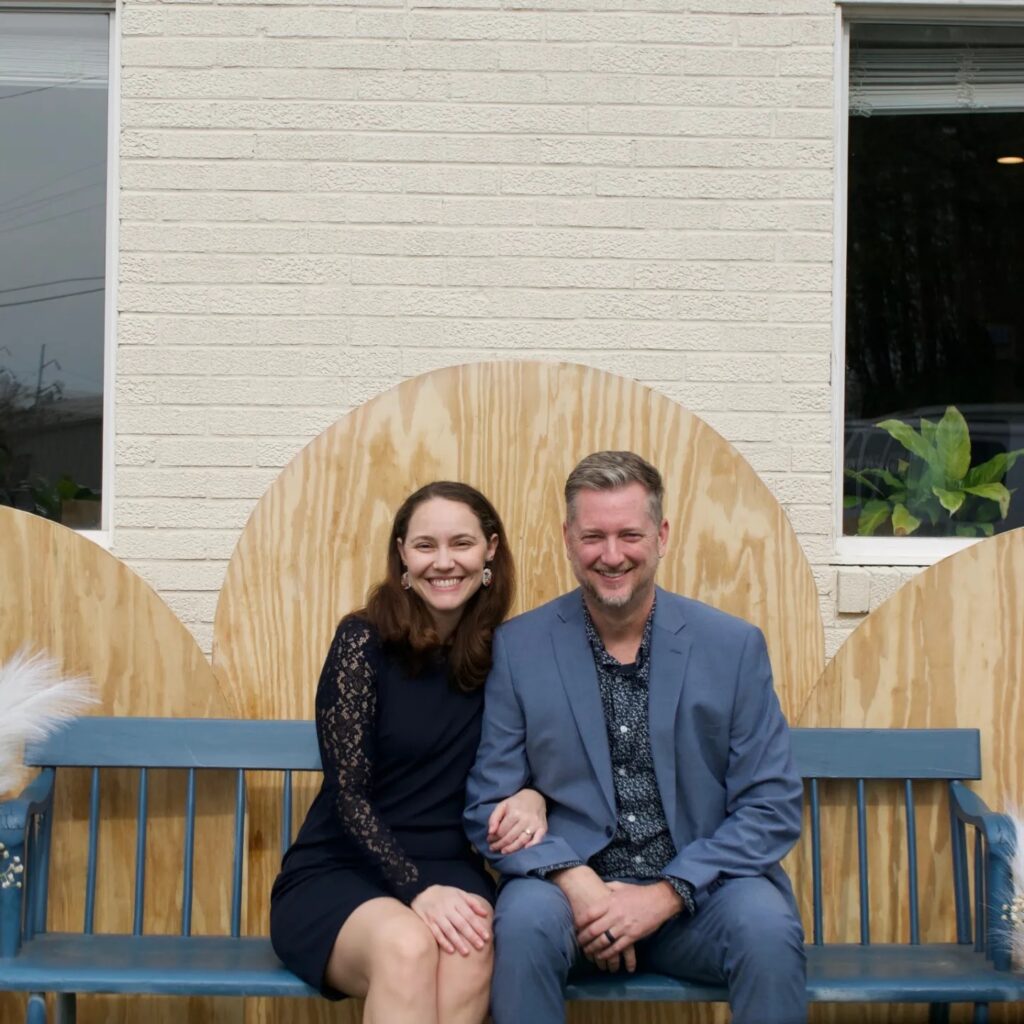
“Hey Y’all! My name is Dale Stephens. I pastor a local church in Mableton, GA called Pure Hope Church. We initially launched in 2015 in Atlanta, GA, moving and rebranding during COVID. Our church model has been designed to do intentional community work and celebrate the work of God in our lives on Sundays. Additionally, I’m the Founder/President of Pure Hope Inc., a sister organization that does community social programming for vulnerable families in NW Atlanta and South Cobb. The efforts of Pure Hope Church and Pure Hope Inc. are grounded in the conviction that to support community lift, we need presence, trust, and empowerment. We accomplish that vision through various programming depending on the community assets and needs. Currently, you can find us tutoring (Monday- Thursday, K-8), Dinner programs (development-based for the unhoused and low-income housing), trauma-informed programming for at-risk kids, and Emory Medical School’s internship program (CLSM). Lastly, I’m currently the interim director of a state-wide campus ministry focused on spiritual formation and personal development at public universities.”
2. What are some of the biggest challenges people face today in finding a sense of connection? In what capacities have you seen that?
“Wow. What a question. The most significant challenges are personal confidence (insecurity), individualism, a subtle push towards atomistic thinking, divisive rhetoric in the public square (online), algorithmic-driven information gathering, and fear-driven self-protectionism. That sounds like a philosopher’s paper. I hope it doesn’t read pretentious.
1) Personal Confidence: The daily reality is that we all have insecurities when navigating new environments, connections, and transitions. Many of us have a general level of confidence and security that allows us to present ourselves well. Yet, the nagging voices of doubt that blame, shame, and peck at our ego impact our desire to put ourselves in new relationships, opportunities, and the like.
2) Individualism: The American project has had a beautiful philosophy of the rights and responsibilities of the human self. Yet, that project to the extreme brings an attitude of protectionism, isolation, and apathy. It sounds in our minds like “that’s not my problem” or “that’s not my fault.” From my view, we need to push towards a communal-minded responsibility that joins others in the making of a prosperous community.
3) Rhetoric: The snarky, trolling rhetoric online deposits subtle doubts about others. It erodes our trust in ourselves and our community.
4) The Algorithm: I am terrifyingly amazed at the online narrated view of reality based on our clicks. It has created echo chambers and a lack of open-minded curiosity for the world, causing suspicion of the other.
5) Self-protection: There is a drive in all of us to maintain and survive the safe bubble we have built. After all, it is a scary world. There is evil, selfishness, and other potential harms. Unfortunately, that drive can keep us from engaging in meaningful ways with loving people.
Bonus: Metropolitan lifestyle: We live in a beautiful city where we can be surrounded and all alone. Our modern world requires a minimum of 50 hours of work per week with coworkers who often live in disparate parts of the city. Then, we load up into our car for another commute. Throw in kids’ pick-ups, dinner, and sports with weekends packed to the gills. There is little time left to engage routinely with the same people in proximity.”
3. How does being part of a church community (or any community) contribute to the mental and emotional health of it’s members?
“Gosh, there is so much to say here. The research is clear that a support system is critical in physical health, mental health, and emotional health. The beauty of worship within a community is multifaceted. The collection of people together in union helps each individual to be seen (attuned), touched (through hugs, handshakes, and high-fives), and heard. This community offers a framing and reframing of human trials and triumphs—the public impartation of hope and conviction in a space to self-assess, reflect, and transform. Lamenting and mourning together the loss and tragedies with others is a powerful experience. Worship as a physical experience allows the body to realign with someone(s) bigger than oneself. Gratitude is a healthy anchor and guide to mental health issues. Taking an hour or so to be undistracted by the noise of the world offers a purification for the soul. In my tradition, we believe God heals today; therefore, we have found a healing touch for our hearts and minds on Sundays. Lastly, a community that is active in serving vulnerable individuals removes the overemphasis on the self and give the volunteer additional meaning and purpose. Those two outcomes are significant in supporting mental health.
For those curious, Jesus was accused, attacked, isolated, harmed, and mourned. His response? He surrounded himself with a support system (the disciples, Mary, and Martha). Touched those who were isolated (the sick). Confronted those who crossed boundaries (Religious and Political Elites). Removed himself from certain accusers, crowds, and circumstances (retreat). Participated in religious environments (Feast, Festivals, Temple). Prayed (publicly and privately). We say at our church: Live like Jesus and Love like Jesus. These are some of the behaviors we hope to embody.”
For more on this, check out these articles:
Religious Attendance, Spirituality, and Major Depression in Canada: A 14-Year Follow-up Study
The effects of gratitude interventions: a systematic review and meta-analysis
4. What are some simple, practical steps people can take to build stronger connections in their own lives?
“Finding:
- Ask around within your current circle of friends, neighbors, and family to find where they are finding community. (assessing for healthy organizations)
- Invite someone in your circle to go with you to a new community organization. (there’s a sense of safety in numbers )
- Pep talk yourself into a positive headspace when entering a new environment. (address insecurities)
Building:
- Invest your effort: It is easy to be in attendance, but full presence (body, mind, spirit) is best.
- Set positive expectations: Having positive intentions sets your mood for a positive experience.
- Be kind: support, encourage, and cheerlead others; also be prepared to forgive.
- Establish healthy boundaries: connection requires mutual trust.
Maintaining:
- Choose your battles: major on the majors and minor on the minors. Not every battle is a war.
- Reciprocity: Often, one party makes more effort than the other. Don’t be the other 🙂
- Behave: You can’t control other people’s responses. You can control yours. Live with character.“
5. What is the biggest takeaway you hope people have about the link between community connection and mental health?
“I hope people hear that they are not alone, and anonymity is a self-preservation strategy that falls short of a thriving life. In my experience, when having mental health challenges, we often take a metaphorically modified “Heisman Stance.” One hand is attempting to draw people in while the other hand “stiff arms” anyone trying to get close. Fight the temptation to stiff-arm. There is a God who is there. There is a community that will embrace you. Turn in towards God and community. The faith community is not a mental health professional, and a mental health professional is not a community of faith; these are two crucial parts of your mental health ecosystem working in a symbiotic relationship for your well-being.
As a pastor, mental health has been a familial and personal reality. I am sad for those who are suffering. I am optimistic that there is a flourishing path forward for us all. The Biblical text is clear that there is peace (shalom) for us all found within a healthy community.”
We are so grateful to Dale Stephens for sharing his wisdom and insights on such a crucial topic. His work as both a pastor and a non-profit founder is a powerful testament to the impact that genuine connection can have on our well-being. As we close, we want to challenge you to think about your own “village.” Whether it’s a family member, a friend, a coworker, or a neighbor, take a step today to deepen a connection that matters. Remember, you don’t have to navigate life’s challenges alone. By actively seeking out and nurturing community, you are not only helping yourself but also strengthening the collective well-being of those around you.
*If you or a loved one is experiencing a mental health crisis, please reach out to 988 via call, text, or chat for 24/7 professional and compassionate service.*