
Slowing Down with the Season: How Autumn’s Shift Impacts Your Mental Well-Being

As the days grow shorter and the crisp autumn air settles in, you might notice a subtle—or not-so-subtle—shift in your internal rhythm. Maybe your usual morning motivation feels a little harder to spark, your focus drifts more easily, or you find yourself craving quiet evenings over packed schedules. In a culture that demands year-round hustle, it is easy to mistake this seasonal slowdown for a personal slump. Yet, just as nature begins to pull its energy inward, your mind and body are responding to real biological cues. Instead of fighting against the season, allow this to be an invitation to align with it—adjusting your daily habits, grounding your routines, and intentionally letting go of what no longer serves you before the year comes to a close.
You don’t have to navigate heavy seasons alone. If you need immediate mental health support or just a safe space to talk things through, free, confidential help is available 24/7. Call, text, or chat 988 to connect with a trained professional.
The Science Behind the Slowdown
The shorter days and reduced sunlight of late autumn can often leave us feeling overwhelmed by unresolved tasks—and exhausted at the exact same time. It is a fact that less sunlight alters melatonin and serotonin production, directly impacting our energy and focus. So what are these chemicals in our brains, and how do seasonal shifts affect them?
- Melatonin is a hormone produced primarily by the pineal gland that regulates your sleep-wake cycle and circadian rhythm. It signals to your body that it is evening and helps align your internal 24-hour clock. Longer nights and shorter days can extend melatonin secretion or increase nighttime production, often contributing to daytime grogginess, fatigue, or seasonal affective disorder (SAD).
- Serotonin is a chemical messenger that helps regulate emotional stability, focus, anxiety, learning, and memory. It also supports sleep-wake cycles and acts as a precursor to melatonin. When daylight drops in fall and winter, serotonin activity dips as well—which can trigger low energy, fatigue, carb cravings, and a lower overall mood.
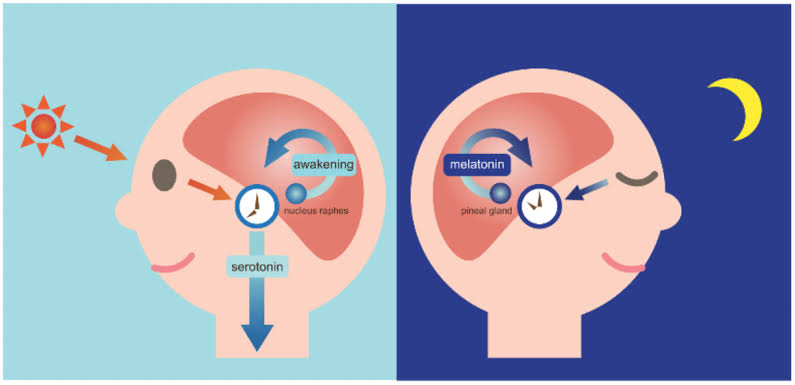
Diving deeper into what is happening internally helps us recognize an important truth: feeling quieter, more reflective, or fatigued in late autumn is biologically normal, not a personal flaw.
This can be contradictory to our modern, societal way of being, especially with the end-of-year craze and pressure. Allow this to encourage a slower pace and appreciating the seasons for what they each offer.
Micro-Habits to Ground Yourself this Season
To support our well-being this season, there are small habits and routines we can embed into our days to help regulate our internal clocks. These intentional moments of wellness may seem simple, yet they make a meaningful difference—especially ahead of what can feel like a long, hard winter season.
- Morning Light Anchor: Get 10–15 minutes of natural outdoor light within 30 minutes of waking to reset cortisol and boost daytime focus. Even on overcast mornings, stepping outside into fresh air gives your brain a clear signal that the day has begun.
- The Evening Digital Sunset: Dim indoor lights and step away from screens 60 minutes before bed to support natural melatonin release. Giving your eyes a break from bright blue light makes it much easier for your mind to shift out of “problem-solving” mode.
- Warm Evening Rituals: Replace late-night scrolling with calming sensory cues such as herbal tea, reading, a warm shower, or journaling. Pairing warmth with quiet signals to your nervous system that it is safe to wind down.
- Grounded Gratitude: Practice a quick daily check-in—such as noting one small moment of ease or appreciation—to steady your mood without forced positivity. Even acknowledging a hot cup of coffee or a quiet five-minute break helps train your brain to spot stability during busy days.
Clearing Mental Clutter
Sometimes we overwhelm ourselves with unnecessary tasks and processes that drain far too much of our energy. Just as trees drop their leaves to conserve energy for winter, we can intentionally release unnecessary weight to preserve our mental bandwidth. Taking a few quiet minutes to self-audit a few key areas can make an immediate difference:
- Over-commitments: Obligations, favors, or social plans driven purely by guilt rather than genuine desire.
- Mental clutter: Lingering “shoulds” or unfinished goals from earlier in the year that no longer align with who you are today.
- Draining habits: Everyday routines—like doomscrolling, constant multitasking, or over-scheduling—that quietly deplete your focus.
Try a simple check-in this week: Choose just one item from those three areas to pause, delegate, or let go of completely for the rest of the month. Notice how much breathing room opens up when you stop carrying what you no longer need.
Slowing down during this season isn’t a sign of falling behind—it’s intentional maintenance for your mind. By honoring your body’s natural rhythm, anchoring your days with small, restorative habits, and letting go of unnecessary weight, you give yourself permission to move through the rest of the year with steadiness rather than burnout.
Looking for more mental health resources? Check our our Mental Health Resources page to find more support for your mental well-being.