The Clinical Perspective: How to Actually Reset Your Mental Health this New Year
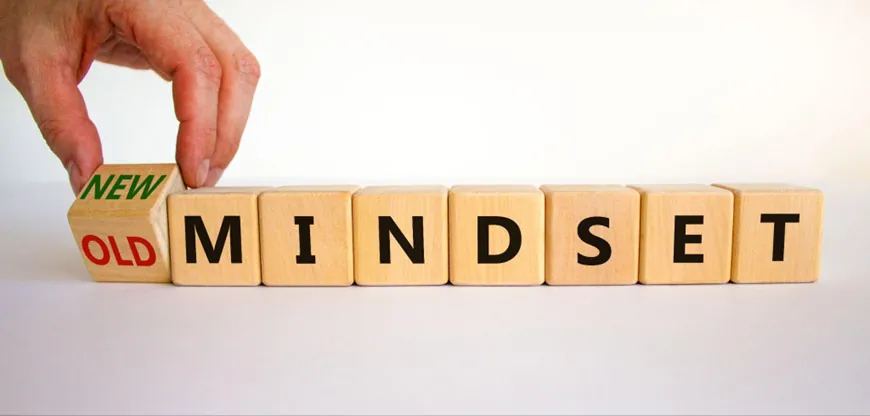
A new year represents a fresh chapter, but we can’t write a new story if we’re still using an old pen. True transformation doesn’t happen in our planners; it happens in our minds. Today, we are joined by Annette Hughes, LCSW with Social Concepts Therapeutic Services, who is an expert in helping individuals navigate life’s transitions and reclaim their mental well-being. Whether you’re looking to break free from ‘all-or-nothing’ thinking or simply want to start 2026 with more self-compassion, Annette’s insights on healthy mindset shifts will give you the tools to make this your most grounded year yet.
1. Can you share a bit about yourself and your practice? What is your “why” for getting into this work?
Social Concepts Therapeutic Services (STCS) aims to promote emotional wellness for individuals (children, adults, and seniors), couples, families, and schools.
Mrs. Annette Hughes, LCSW, CAMS-II, received her Bachelor of Arts degree in Sociology from Clark College, now known as Clark Atlanta University, and her Master of Social Work from Adelphi University in Garden City, New York. She’s a married mother of 3 children and 5 grandchildren. For over 35 years, Annette has provided empowering and life-changing behavioral health, substance abuse, and wellness services, serving several year working in child abuse prevention.
Annette feels that wellness is multidimensional, encompassing the following factors: Social, Emotional, Spiritual, Intellectual, Physical, Environmental, Financial, and Occupational.
Today, her commitment to community-wide wellness extends to the greater Atlanta community, offering the same high-quality care for counseling, case management and coordination, health assessments, and more. Annette has membership in several local and national organizations.
2. Many people feel ‘burnt out’ or ‘stuck’ as the year ends and the new year can often be a time where people want to start fresh again. What are some subtle signs or symptoms that someone is in desperate need of a mindset shift, and how can they begin to acknowledge that without judgment?
“There are many subtle signs of burnout and it usually starts out with feeling ill. Many times our body’s immune system begins to break down encouraging us to slow down, but we continue to try to fulfill our obligations in the name of professionalism. As we push forward, disorganization, forgetfulness, competency and accountability becomes tested as our mental and physical wellness declines.”
When these symptoms arise, take a moment to pause and give yourself compassion. Rest is not weakness. Do something that pours back into you and gives you that breath you so need.
3. What is one evidence-based technique or daily habit you often recommend to your clients to help them transition from a fixed, stressed mindset to one of growth and resilience?
“I teach Emotional Intelligence as a standard; knowing how to manage our own emotions and that of others. If we keep in mind that not everyone had the same path to success, we can appreciate the fact that resilience has helped us make it this far, giving us confidence (self efficacy) that we have strength for the end game, whatever that it.”
Emotional Intelligence is the ability to recognize, understand, and manage your own emotions while also recognizing and influencing the emotions of others. There are 5 pillars of emotional intelligence:
- Self-Awareness: The ability to recognize your own emotions and how they affect your thoughts and behavior. You know your strengths and weaknesses and how your “triggers” impact others.
- Self-Regulation: The ability to control impulsive feelings and behaviors. Instead of reacting instantly to anger or stress, you can pause, reflect, and choose a productive response.
- Motivation: A passion for work that goes beyond money or status. Emotionally intelligent people are driven by internal goals like personal growth, curiosity, or the satisfaction of being productive.
- Empathy: The ability to understand the emotional makeup of other people. It involves treating people according to their emotional reactions and “walking a mile in their shoes.”
- Social Skills: The proficiency in managing relationships and building networks. This includes effective communication, conflict management, and the ability to lead or inspire others.
Emotional Intelligence allows you to navigate conflict, build stronger bonds, and lead effectively.
4. January often brings a lot of pressure to be ‘perfect.’ How can we practice self-compassion when we inevitably hit a setback in our mental health journey during the first few months of the year?
“Time Management has been instrumental in my bringing goals and peace of mind into fruition. By implementing a planner/calendar for the year, adding the special days to celebrate like my family’s birthdays, my anniversary, planned trips, etc., then add other “personal engagements” (all the fun stuff), you’ll be able to get a visual picture of the actual time you have for yourself. Then add work, faith and community commitments, etc., and you can get a realistic view of how we can overwhelm ourselves before we even get out of January. If you learn to organize on a monthly basis, then everything else will fall into place because self-compassion is putting yourself first, with no guilt and learning to say “No” can be liberating.”
Understanding that we cannot control most things that will happen to us can be the first step to having a more peaceful mindset. When we inevitably do encounter challenges, instead of letting the emotions take control, let’s choose to focus on what we do have control over which may ultimately lead to more letting go and self-compassion.
5. If someone could only implement one small change to protect their mental peace in 2026, what would you suggest it be?
“Stop multi-tasking! It never works. We can’t be all things to everyone and be all places at all times; we should recognize our limitations. We should be mindful, at all times, to put boundaries in place to keep our peace.”
Mono-tasking vs. multi-tasking:
1. Lower Stress Hormones
When you multitask, your brain is constantly scanning for new stimuli, which triggers the amygdala (the brain’s “alarm” center). This releases cortisol and adrenaline, keeping you in a “fight-or-flight” state.
- The Benefit: Slowing down tells your nervous system it’s safe to relax, lowering your heart rate and reducing feelings of jittery anxiety.
2. Elimination of “Switch Costs”
Every time you switch between tasks, your brain pays a “cognitive tax.” It takes time and energy to refocus on a new goal. This constant “resetting” leads to mental fatigue and brain fog.
- The Benefit: By focusing on one thing, you preserve your mental energy, leaving you feeling less “drained” at the end of the day.
3. Access to “Flow” States
Deep mental peace often comes from Flow—a state where you are so immersed in an activity that time seems to disappear. You cannot enter a flow state if you are interrupted every few minutes by a notification or a new task.
- The Benefit: Flow states are naturally rewarding and provide a sense of deep satisfaction and calm that superficial “busy-ness” cannot.
4. Higher Emotional Clarity
Multitasking forces the brain to prioritize task completion over emotional processing. If you are constantly rushing, you may not notice that you are becoming frustrated or overwhelmed until it’s too late.
- The Benefit: Slowing down creates a “buffer” that allows you to check in with your feelings before you reach a breaking point(Self-Awareness!).
5. Better Information Retention
The brain’s “working memory” is like a small bucket; if you try to pour too much in at once, it overflows. Multitasking prevents information from moving into long-term memory.
- The Benefit: When you focus on one thing, you actually remember what you did, which reduces the “did I forget something?” anxiety that often disrupts peace of mind.
6. Anything else you would like to share regarding this topic or your practice?
“Social Concepts Therapeutic Services focuses on mitigating behaviors through behavioral modification and non-pharmacological approaches including CBT, Solution-focused Therapy, Mindfulness, and holistic strategies, focusing on mind-body techniques, physical therapies and lifestyle changes. Reach out today if you need support. (Referrals to other service providers and medication management is assessed as part of the treatment plan)“
How can you support your mental health this year?
Shifting your mindset isn’t an overnight task, but as Annette highlighted today, it is a skill we can all practice. If you’re feeling inspired to take your mental health journey a step further, remember that professional support is an incredible gift to yourself. What is one small ‘mindset shift’ you can commit to today? Even the smallest pivot can change the course of your year.